Massages and exercise – before or after?
Image by Alora Griffiths. There is high tension in the World Cup final, as after a draw it goes into extra time and then, after a short break, straight into a penalty shootout. Anyone who has taken a closer look at what is happening on the sidelines will have noticed that many players receive massages from the support team during this important phase. Does that make sense? What purpose do massages serve in elite and popular sports and what about the eternal debate as to whether massages should be used before sport or after? We create clarity and clear...

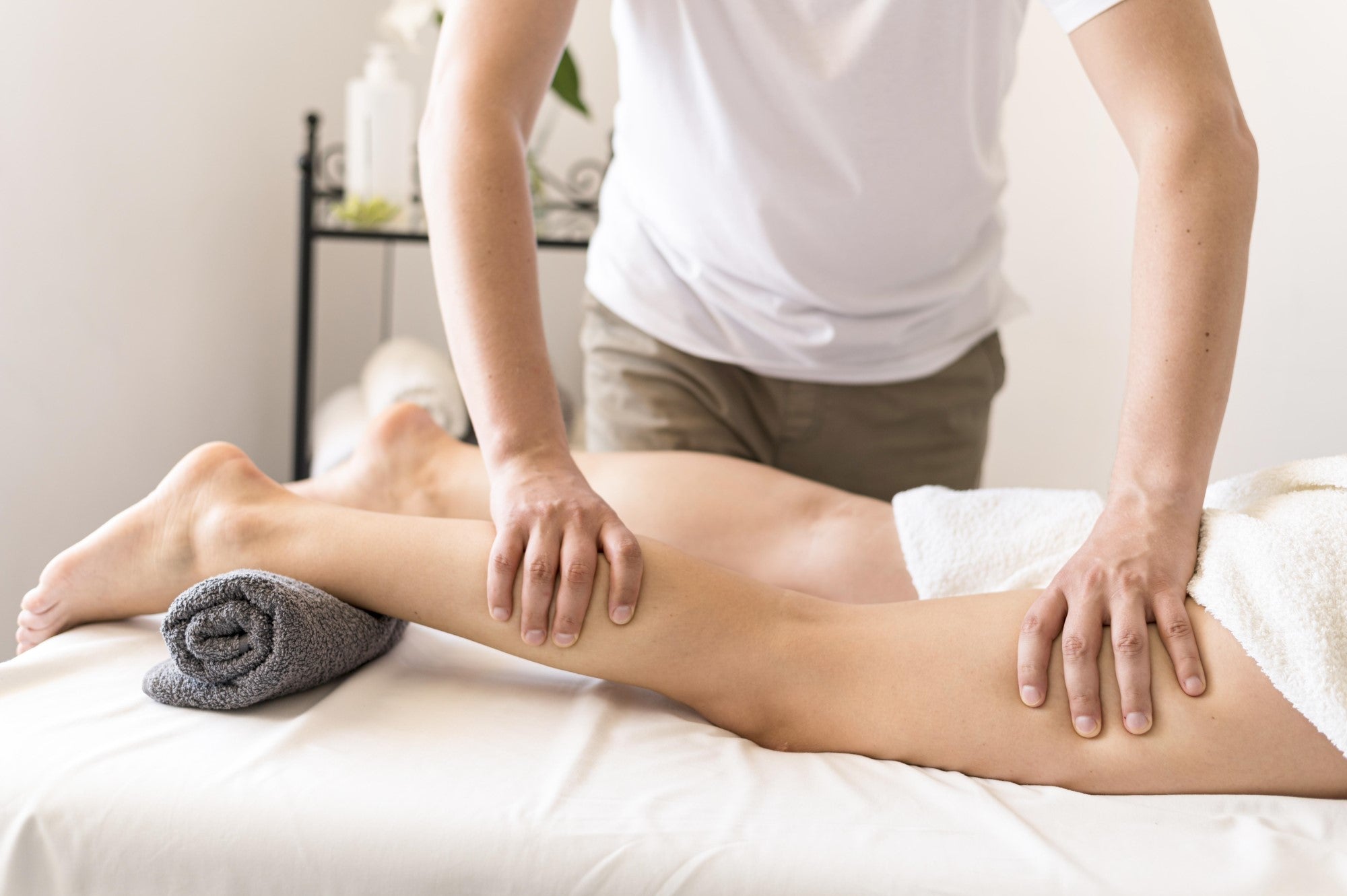

Image by Alora Griffiths.
There is high tension in the World Cup final, as after a draw it goes into extra time and then, after a short break, straight into a penalty shootout. Anyone who has taken a closer look at what is happening on the sidelines will have noticed that many players receive massages from the support team during this important phase. Does that make sense?
What purpose do massages serve in elite and popular sports and what about the eternal debate as to whether massages should be used before sport or after? We create clarity and clear up the controversial topic once and for all, so that you can positively support your performance during sport with targeted massages. The first question that comes to mind is what is the purpose of massages in sports?
Reading tip: From head to toe: This is how massages help
The effects of massage in sports
In terms of time, a massage can in principle be used before, during or after the sports session. In fact, all three variants are permissible and make sense if you take into account what goal you are pursuing in the respective phases and which massage techniques are to be used.
The most obvious use case for treatment is to relax the muscles. It counteracts tension and cramps. In the scenario mentioned above, this is also one of several reasons for the massages on the sidelines. After intensive use of the muscles, there is a risk of cramping, which must be absolutely avoided during the required performance. Muscle cramps and fatigue are also directly related to another component, lactate.
Sports massages against muscle fatigue
The term lactate is often familiar from research into muscle fatigue and training. It is a metabolic product that is created when the body needs to produce energy in muscles.
This can be done by supplying oxygen or, in high-performance phases, by converting sugar into lactic acid. The resulting “waste product” is lactate and is deposited in the muscle. With continued performance, more lactate is produced than can be broken down and the muscle becomes increasingly fatigued.
This is exactly where a massage can have its effect again. Targeted massaging of the affected muscle areas partially supports the removal of lactate, which means that fatigue sets in later or the sore muscles are not as bad as they would be without treatment.
Massages to increase muscle tension
Another use case can be observed particularly well in winter sports. Ski racers can often be seen having their thighs patted down by their supervisor immediately before the start.
There are essentially two reasons for this. On the one hand, muscle tension should be maintained during the waiting time before the start. The second reason is temperature. The tapping also promotes blood circulation in the treated area and thus more warming blood is transported to the muscles needed for competition.
Attention: In fast-paced sports, care should be taken not to relax muscle tension through massage, as this would be counterproductive and can also increase the risk of injury.
The massage after sport
We have now learned about scenarios in which a massage before or even during exercise can be useful. However, the most common massage, which is particularly relevant for amateur athletes, should be carried out after sporting performance. There are several reasons for this, including the circulation-promoting effect.
In this way, more nutrients and oxygen reach the stressed muscle. The regeneration time can be significantly shortened and the muscle is ready for the next training session more quickly. The removal of lactate and the relaxing effect of a sports massage also help you to be ready for action sooner.
In addition to muscle regeneration, there are also therapeutic applications for massage in sports. For example, it can support the healing process of injuries. However, advice from a doctor is essential here, as a massage does not make sense in all cases. Injured muscles should be treated with extreme caution and should not be subjected to additional strain.
Breaks between massages – how much is sensible?
Regeneration is a good keyword, because massages should not be used carelessly, especially in sports. Basically, the frequency with which you should undergo a massage depends on how tense or strained your body or muscles in general are. A good rule of thumb is an interval of around 1-2 weeks with low stress.
For professional athletes and those who train regularly and intensively, two to three massages per week can also be beneficial. It is important to listen to your body and not to massage because of pain. If you would like to receive massages more often, you can have different areas of the body treated alternately. Under no circumstances should massages put strain on the body – recovery is the primary goal.
Pain and massages
Another controversial topic is pain during massages. On the one hand, whether a treatment should or even has to be painful, and on the other hand, what happens with massages on painful areas and injuries. The latter should definitely be discussed with a doctor. As mentioned above, there are also therapeutic massages, but these should only be carried out under medical advice and guidance.
When it comes to the massage itself, you often hear that it “has to hurt,” otherwise it won’t work. The primary purpose of a massage is relaxation, and it is obvious that pain has little place here. Treatments are usually painful because the tension in the affected areas is so strong that considerable pressure seems to be required to release it. However, it makes more sense to simply increase the duration of treatment with a weaker intensity.
More frequent treatments help ensure that the hardening and tension are no longer so severe and can be easily massaged away with gentle massages. The commandment here is: more patience than strength.
Sports massages – the sensible addition to a fit body
It is no coincidence that massages have always been used in sports. Not only the pleasant feeling, but also the supporting effect on regeneration and healing have a positive effect on the performance of your muscles. If you do sports regularly or even professionally, sports massages should definitely be part of your everyday life in order to get the most out of your training and yourself in the long term.
Frequently asked questions about massages in sports
What is the purpose of massages in sports?
Massages support athletes through muscle relaxation, promote blood circulation and help with regeneration. They can be used sensibly before, during and after sport, depending on the goal of the treatment.
Should you get a massage before or after exercise?
Both can be useful: before exercise, massages primarily serve to activate and promote blood circulation; after exercise, the focus is on recovery, lactate reduction and regeneration.
What does massage do during a game or competition?
They help relieve muscle spasms, promote blood circulation and maintain performance, especially during intense exercise, such as overtime in a football game.
What does lactate have to do with massage?
Lactate is a metabolic product that is produced during intensive muscle work and contributes to fatigue. Massages promote blood circulation and can help break down lactate more quickly. This means the muscle remains efficient for longer.
Why are skiers massaged or patted down before the start?
To maintain muscle tension and warm the muscles. This is important in order to be able to start explosively and prevent injuries.
How often should you use sports massage?
For recreational athletes, an interval of 1-2 weeks is often sufficient. For more intensive training or professional sports, two to three massages per week can be useful. It is important to listen to your own body.
Are painful massages more effective?
Not necessarily. A massage should primarily have a relaxing effect. Severe pain is more likely to indicate too much pressure or too high an intensity. It is better to work regularly with gentler massages to relieve tension in the long term.
Can you massage injured muscles?
Only after consulting a doctor. Therapeutic massages for injuries must be carried out specifically and carefully. Incorrect applications can delay or worsen the healing process.
Mitgründer und Geschäftsführer der Massagesessel Welt. Mit seinem Expertenwissen und seiner Branchenkenntnis hilft er, Privatpersonen und Unternehmen zu passenden Massagesessels für Entspannung, Gesundheit und Vitalität zu finden. Die individuelle Fachberatung erfolgt sowohl telefonisch oder per Videochat, als auch in der Ausstellung vor den Toren Stuttgarts.